Childhood Vision Problems
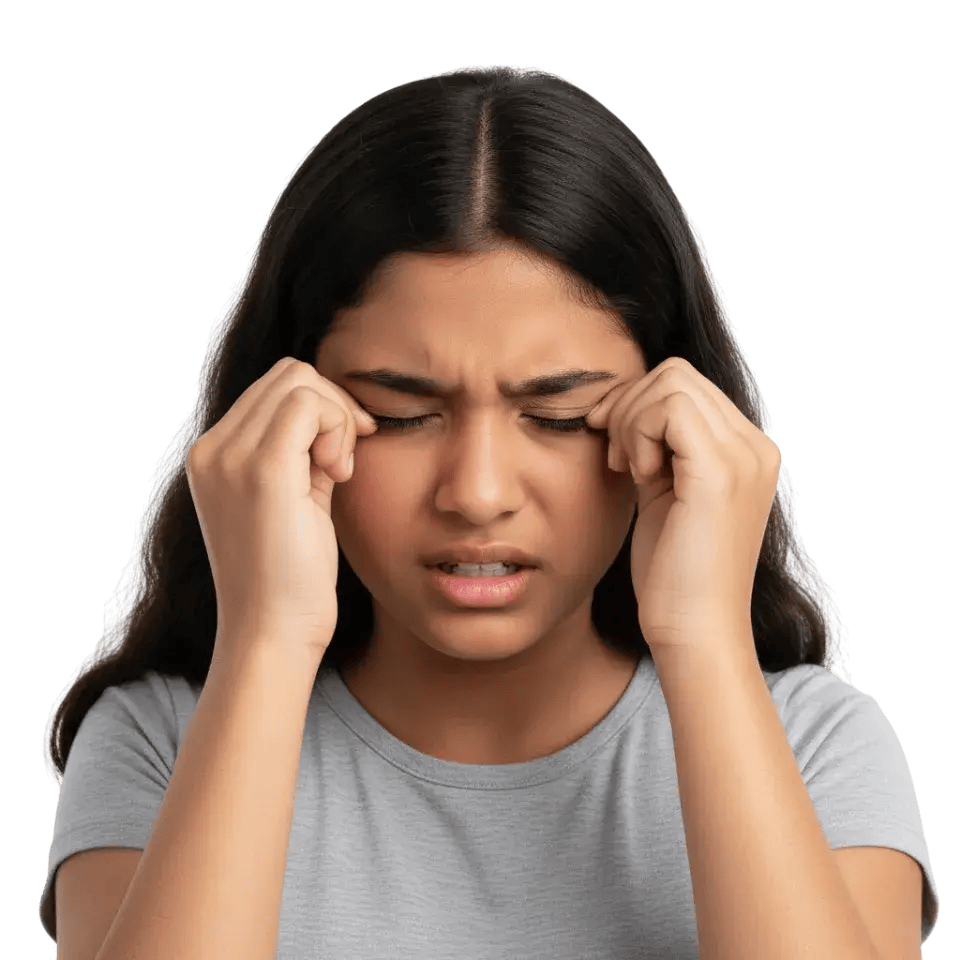

Signs Your Child May Have a Vision Problem
Children who squint frequently may be trying to sharpen a blurry image. Squinting temporarily changes the shape of the eye and can make things look clearer for a moment.
Constant eye rubbing can signal eyestrain, fatigue, or irritation from trying to focus. If your child rubs their eyes often, especially during homework or screen time, we recommend scheduling an eye exam to rule out vision issues.
Frequent headaches in children, especially after reading or schoolwork, may indicate that the eyes are working too hard to focus. Blurred vision or seeing double are clear red flags that something is not right.
Even young children can describe these symptoms if you ask the right questions. Pay attention if your child says words look fuzzy, letters jump around, or they see two of everything.
Healthy eyes should move smoothly and stay aligned. If one or both eyes drift inward, outward, up, or down, your child may have an eye muscle problem that needs treatment.
Sometimes misalignment is constant, and other times it appears only when your child is tired or looking at something up close. Either pattern warrants a comprehensive eye exam.
Children with nearsightedness struggle to see far away but can see clearly up close. They naturally move closer to the television or hold books right up to their face to make images sharper.
While sitting close occasionally is normal, a consistent pattern of getting very near to objects may mean your child needs glasses to correct distance vision.
Additional Warning Signs
If your child frequently covers or closes one eye, they may be blocking out double vision or trying to use only their stronger eye. Head tilting can also help compensate for misaligned eyes or unclear vision.
These adaptations work temporarily, but they do not fix the underlying problem. Early treatment can prevent long-term complications and help both eyes develop properly.
Children who struggle to see clearly often avoid tasks that require sustained visual attention. They may resist homework, skip over pictures in books, or lose interest quickly in puzzles and crafts.
What looks like lack of focus or fidgeting may actually be frustration caused by blurry or uncomfortable vision. An eye exam can reveal whether vision problems are holding your child back.
If one pupil looks white in photos where a red reflex is expected, or if a reflection looks asymmetric between the two eyes, schedule an urgent exam. This can be caused by cataract, retinoblastoma, or other conditions that require prompt evaluation.
Many smartphones and cameras use flash that can reveal these abnormalities before they are obvious in normal lighting. If you notice this pattern in multiple photos, do not wait for a routine visit.
Common Visual Problems in Children
Nearsightedness means distant objects appear blurry while near objects stay clear. Farsightedness is the opposite, though many farsighted children can still see well at all distances because their young eyes compensate.
Astigmatism happens when the cornea has an irregular shape, causing blurred or distorted vision at any distance. All three conditions are common, easily diagnosed, and correctable with glasses or contact lenses.
Lazy eye develops when the brain starts ignoring signals from one eye, usually because that eye is much weaker or misaligned. Over time, the unused eye loses the ability to see clearly, even with glasses.
Treatment works best when started early, ideally before age 7 to 8, but many older children and teens also improve with consistent therapy. We may recommend patching the stronger eye, using special eye drops, or correcting underlying refractive errors to strengthen the weaker eye.
Strabismus means the eyes do not point in the same direction. One eye may turn in, out, up, or down while the other eye focuses straight ahead.
This misalignment can cause double vision, poor depth perception, and amblyopia if left untreated. Depending on the type and severity, we may recommend glasses, prism, treatment for amblyopia, targeted orthoptic exercises for convergence insufficiency, botulinum toxin in select cases, or eye muscle surgery to realign the eyes.
Some children struggle to follow a moving object smoothly or shift focus between near and far. These tracking and focusing problems can interfere with reading, catching a ball, or copying from the board.
We can assess how well your child's eyes work together during the exam. Vision therapy exercises may help improve coordination, tracking accuracy, and focusing speed.
Color blindness is usually inherited and affects the ability to distinguish certain colors, most often reds and greens. It does not mean your child sees only in black and white.
There is no cure for inherited color blindness as of 2025, but identifying it early helps teachers and parents make adjustments. We can test for color vision deficiencies during a routine exam. New color vision changes can be a sign of optic nerve or retinal disease and should be evaluated promptly.
If you notice your child's eyes making repetitive, shaky movements, especially when they try to look at something, this may be nystagmus. Some forms are present from infancy, while others appear later.
Nystagmus can be associated with refractive errors, retinal or optic nerve conditions, or neurological issues. It should be evaluated promptly to identify the cause and discuss treatment and support options.
Risk Factors for Childhood Vision Problems
Vision problems often run in families. If you or your partner wear glasses or have been diagnosed with lazy eye, crossed eyes, or other eye conditions, your child faces a higher risk of developing similar issues.
Let our eye doctor know about any family history of eye disease, including glaucoma, cataracts, retinal problems, or genetic conditions. This information helps us watch for early warning signs.
Babies born prematurely or with low birth weight are at increased risk for vision problems, including retinopathy of prematurity, refractive errors, and eye alignment issues. Oxygen therapy and other intensive treatments can also affect eye development.
We recommend early and frequent eye exams for children with a history of prematurity or complications during birth to catch and treat any issues as soon as possible.
Children with developmental delays, cerebral palsy, Down syndrome, or other neurological conditions often have a higher rate of vision problems. The brain and eyes work closely together, so conditions affecting the nervous system can impact sight.
Regular eye exams are especially important for these children. Even if they cannot read an eye chart, we have special tests designed to assess vision and eye health without verbal responses.
A history of eye trauma, severe infections, or inflammation can lead to long-term vision changes. Scar tissue, structural damage, or secondary complications may develop months or years after the initial injury.
If your child has ever experienced a serious eye injury or infection, ongoing monitoring helps us detect and manage any delayed effects on vision or eye health.
What Happens During Your Child's Eye Exam
Most children receive vision screening during routine well-child visits. Schedule a comprehensive eye exam any time there are concerns, a failed screening, or risk factors. As a preventive baseline, we recommend at least one comprehensive eye exam between ages 3 and 5, then every one to two years during school.
Infants with higher risk factors, such as prematurity, family history of serious eye disease, or any eye concerns, should be examined earlier in the first year. We will tailor the visit schedule to your child's needs, results, and risk profile.
Babies and toddlers cannot read letters, but we can still assess their vision using special techniques. We observe how they track objects, check their pupil responses to light, and look for signs of equal vision in each eye.
We also use instruments that measure refractive error and eye alignment without requiring any response from your child. These tests are quick, painless, and give us valuable information about eye health and development.
Once children can identify pictures or letters, we use age-appropriate eye charts to measure visual acuity. We test each eye separately to make sure both eyes see clearly and work together as a team.
We also check eye movements, depth perception, color vision, and how well the eyes focus and align. These tests help us identify problems that may not be obvious during daily activities but can still interfere with learning. When needed, we perform cycloplegic refraction with eye drops to measure prescription accurately by relaxing focusing effort.
Dilating drops temporarily enlarge the pupil and relax the focusing muscles inside the eye. This allows us to see the entire retina, optic nerve, and internal structures clearly and accurately measure refractive error.
The drops cause light sensitivity and blurry near vision for a few hours. Bringing sunglasses for the ride home makes your child more comfortable. Dilation is generally safe. Light sensitivity and blurry near vision usually resolve within a few hours. Rare side effects can occur in infants and young children. Call us if symptoms seem severe or persist beyond 24 hours.
If we notice anything unusual during the routine exam, we may perform additional testing. This can include detailed imaging of the retina, measurements of eye pressure, or assessments of the tear film and eyelid function.
Advanced tests help us diagnose complex conditions and monitor changes over time. We will explain why each test is needed and what the results mean for your child's care plan.
How We Treat Vision Problems in Children
Glasses are the most common and effective treatment for refractive errors in children. Modern frames are durable, comfortable, and come in styles that kids actually like to wear.
We measure your child's prescription precisely and help you choose frames that fit well and suit their lifestyle. Most children adapt to glasses quickly and typically notice an improvement in clarity and comfort.
For children whose nearsightedness is increasing, we offer treatments that can slow progression. Options include low-dose atropine eye drops at bedtime, dual-focus or multifocal soft contact lenses, and orthokeratology lenses worn overnight.
We also recommend more time outdoors and regular breaks from near work. We will discuss the benefits, side effects, age ranges, and monitoring schedule for each option so you can choose what fits your child.
- Low-dose atropine: may cause mild light sensitivity or near blur.
- Multifocal soft contacts: daytime wear, good for motivated children.
- Orthokeratology: worn at night, requires excellent hygiene and follow-up.
- More outdoor time: aim for at least 90 to 120 minutes daily when possible.
Contact lenses can be a great option for mature, responsible children who want an alternative to glasses. Daily disposable lenses are often the safest choice because they require less cleaning and reduce the risk of infection.
We teach proper insertion, removal, and hygiene practices during the fitting appointment. Your child must demonstrate that they can handle lenses safely before we approve them for regular wear.
- Do not sleep in contact lenses unless specifically prescribed.
- Keep lenses away from water: no swimming, showering, or tap water rinsing.
- Wash and dry hands before handling lenses.
- Replace lenses and cases on the recommended schedule.
- Use only fresh disinfecting solution as directed.
- Stop lens wear and call us right away for pain, redness, light sensitivity, or reduced vision.
- Daily disposable lenses are often the safest option for teens.
- Do not share lenses.
Patching therapy covers the stronger eye for part of each day, prompting the brain to use the weaker eye. This strengthens visual pathways and improves vision in the affected eye. Follow the prescribed hours to avoid over-occluding the stronger eye.
Atropine drops blur the stronger eye temporarily to encourage use of the weaker eye. Both methods work best when started early, but treatment can still help many children older than 7 to 8 and some teens. We will review expected timelines and common side effects such as light sensitivity or near blur.
Advanced Treatments and Ongoing Care
Vision therapy is a structured program of exercises designed to improve eye coordination, tracking, and focusing. Evidence-based therapy is most helpful for convergence insufficiency and some accommodative disorders.
Sessions may take place in our office or at home, depending on the program. Progress requires consistent practice, and most children see improvement within several weeks to months of starting therapy. Vision therapy does not treat dyslexia or general learning disabilities.
When glasses and vision therapy cannot fully correct eye misalignment, surgery on the eye muscles may be necessary. The procedure adjusts the tension and position of the muscles that control eye movement.
Eye muscle surgery is typically performed on an outpatient basis. Recovery is usually quick, and most children return to normal activities within a week. We will refer you to a qualified pediatric eye surgeon if this option is appropriate.
As with any surgery, there are risks that include over or under correction, infection, scarring, and the possibility that more than one procedure may be needed. We will review benefits, risks, and postoperative care, and coordinate referral to a pediatric eye surgeon.
Children's eyes change as they grow, so their vision needs may shift over time. We monitor progress closely and adjust prescriptions, patching schedules, or therapy plans as needed.
Regular follow-up visits ensure that treatment is working and that we catch any new problems early. Open communication between our office, your family, and your child's school helps everyone support your child's visual development.
Protecting and Supporting Your Child's Eye Health
Prolonged screen use can cause eye fatigue, dryness, and discomfort in children. Encourage your child to follow the 20-20-20 rule: every 20 minutes, look at something 20 feet away for at least 20 seconds.
Set reasonable limits on recreational screen time and make sure your child takes regular breaks during online learning. Proper lighting and screen positioning also reduce strain and help eyes stay comfortable. More outdoor time is associated with lower risk of developing nearsightedness, so build daily outdoor play into your child's routine when possible.
Good lighting prevents eye fatigue during homework and reading. Use a combination of overhead light and a desk lamp to eliminate shadows and glare on books and screens.
- Position the desk near natural light when possible
- Keep screens at arm's length and slightly below eye level
- Adjust brightness and contrast to comfortable levels
- Encourage good posture to reduce neck and eye strain
Sports-related eye injuries are common but preventable. Protective goggles or sports glasses shield the eyes from balls, sticks, and other hazards during activities like basketball, baseball, and racquet sports.
Sunglasses with ultraviolet protection reduce the risk of long-term sun damage to the eyes. Look for lenses that block 100 percent of UVA and UVB rays, and encourage your child to wear them during outdoor play.
- Choose impact-resistant polycarbonate or Trivex lenses for all children's glasses.
- Use sport-specific eyewear that meets ASTM F803 standards for high-risk sports.
- Ensure a snug, comfortable fit so eyewear stays in place during play.
- Replace damaged lenses or frames promptly.
A balanced diet rich in vitamins and nutrients supports healthy eye development. Leafy greens, colorful fruits and vegetables, fish, eggs, and nuts provide vitamins A, C, and E, along with omega-3 fatty acids and zinc.
Encourage your child to drink plenty of water, get regular physical activity, and maintain a consistent sleep schedule. These habits benefit overall health and help eyes function at their best.
Some symptoms require same-day or emergency care. Contact our office immediately if your child experiences any of the following:
- Chemical splash: begin immediate irrigation with clean water or saline for at least 15 minutes, then seek emergency care.
- Painful red eye in a contact lens wearer.
- New large, hazy cornea with tearing and light sensitivity in an infant, or a visibly enlarged eye.
- New droopy eyelid or unequal pupils, especially with headache or vomiting.
- White pupil in a photo or by direct observation.
- Sudden onset of an eye turning in or out, or new double vision.
- Sudden onset of floaters, flashes, or a curtain over vision.
- Eye pain accompanied by nausea or vomiting.
- Redness and swelling that worsens rapidly.
- Any penetrating injury, blunt trauma, or other trauma to the eye or surrounding area.
- Vision changes after a head injury.
- Bulging or swelling of one or both eyes.
- Extreme sensitivity to light with tearing and pain.
If in doubt, call us. For severe trauma, chemical injuries, or rapidly worsening symptoms, go to the nearest emergency department.
Frequently Asked Questions
Most children receive vision screening during well-child visits. We recommend at least one comprehensive eye exam between ages 3 and 5, then every one to two years during school. Children with risk factors, vision concerns, or those who wear glasses may need more frequent visits based on our recommendations.
Some mild farsightedness may improve as children grow, but most vision problems do not resolve on their own. Conditions like lazy eye and crossed eyes require early treatment to prevent permanent vision loss. Waiting and hoping often leads to missed opportunities for correction.
Let your child help choose frames they find comfortable and appealing. Explain how glasses will make schoolwork, sports, and screen time easier and more fun. Consistent encouragement, positive reinforcement, and wearing your own glasses if applicable can help your child adjust within a few days.
School screenings check only basic distance vision and often miss farsightedness, eye alignment issues, focusing problems, and eye health conditions. A comprehensive exam with our eye doctor evaluates all aspects of vision and eye health, providing a complete picture that screenings cannot offer. Screenings are valuable for catching many issues early, but they do not replace a comprehensive exam when there are symptoms, risk factors, or a failed screening.
Excessive near work and limited outdoor time are linked to a higher risk of developing and worsening nearsightedness. Screen use can also cause eye strain and discomfort. More time outdoors and regular breaks from close work are helpful. We can discuss options that may slow myopia progression if your child is at risk.
This is a common myth with no scientific basis. Glasses correct vision and allow the eyes to work comfortably, but they do not weaken eye muscles or make vision worse. Your child's prescription may change as they grow, but that is due to natural development, not glasses use.
Getting Help for Childhood Vision Problems
If you notice any signs that your child may be struggling with vision, we encourage you to schedule a comprehensive eye exam. Early detection and treatment protect your child's sight, support learning and development, and give them the clear, comfortable vision they need to thrive. Our eye doctor is here to answer your questions and provide expert care at every stage of your child's visual journey. If your child is older and was never treated, it is still worth evaluating; many school-age children and teens benefit from treatment.